
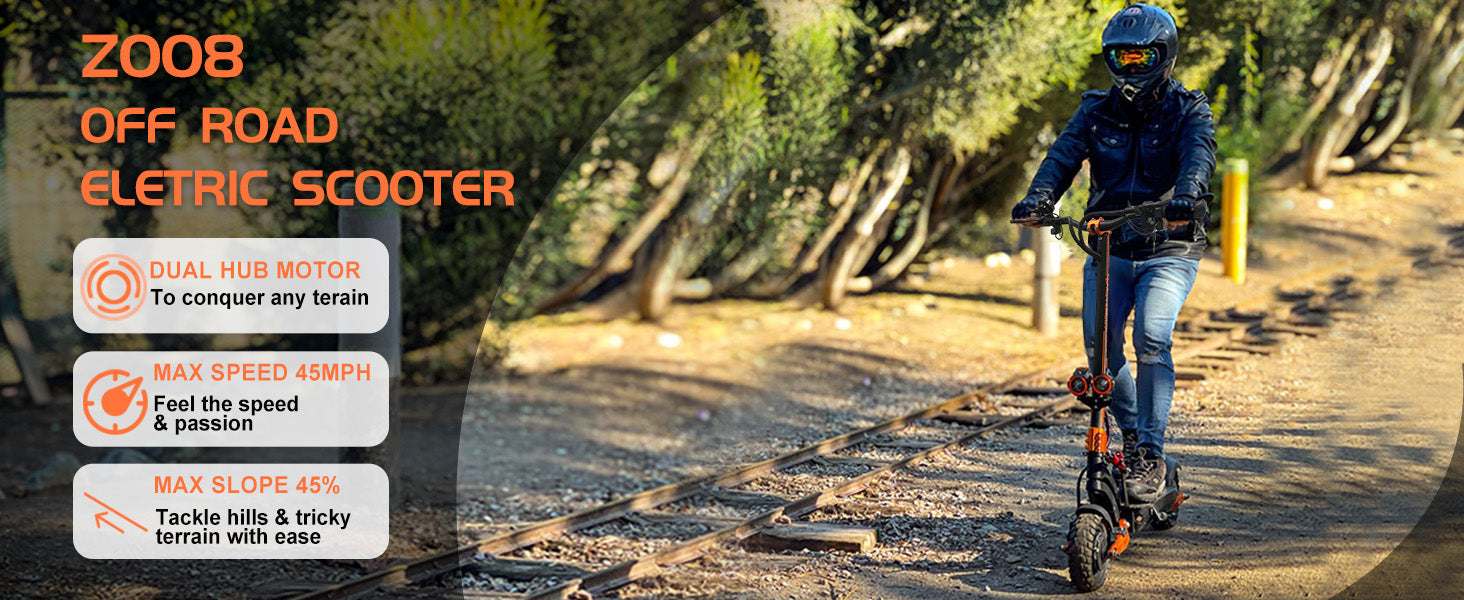
Electric scooters have become the top choice for urban commuting, short-distance travel, and outdoor leisure, favored by countless users for their flexibility, energy efficiency and convenience. Most riders only know how to operate a scooter but lack in-depth understanding of its internal structure and core parts.
A clear grasp of core scooter parts not only helps you choose a cost-effective electric scooter when purchasing, but also allows you to complete daily maintenance, judge common faults and extend the service life of your equipment. Today, we will break down the core components of an electric scooter one by one, covering functions, classification and practical usage tips.
1. Battery: The Power Core of the Scooter
The battery is the energy source of the entire electric scooter, directly determining the range, charging speed and service life of the vehicle, which is the most critical core part.
Main Types
Lithium-ion batteries are the mainstream configuration of current electric scooters. Compared with traditional lead-acid batteries, they feature light weight, small size, long cycle life and stable performance, perfectly matching the portable characteristics of scooters.
Core Parameters & Tips
Battery capacity (mAh/Ah) determines the cruising range; voltage affects the vehicle’s stable output power. Daily use should avoid overcharging, deep discharge and long-term idle power loss. Regular shallow charging and discharging can effectively prolong the battery life.
2. Motor: The Power Source of Driving
The motor is responsible for converting electric energy into mechanical energy, which drives the scooter forward. Its performance directly affects the speed, climbing ability and load capacity of the scooter.
Common Motor Types
Most mainstream scooters adopt brushless hub motors, which are built into the wheel hub. This structure is compact, low-noise, wear-resistant and requires no frequent maintenance. It is divided into front-wheel drive, rear-wheel drive and dual-wheel drive:
-
Front-wheel drive: Light and flexible, suitable for flat urban roads and daily commuting.
-
Rear-wheel drive: Strong traction, better climbing performance and more stable driving, suitable for complex road conditions.
-
Dual-wheel drive: Super power, excellent off-road and climbing ability, ideal for outdoor rough roads.
3. Controller: The Brain of the Scooter
Often called the "brain" of the electric scooter, the controller is the core control unit of the entire vehicle system. It undertakes all core command scheduling.
Core Functions
It intelligently controls power output, speed regulation, braking power cut, battery overcharge and over-discharge protection, and current overload protection. All operations such as acceleration, deceleration and braking of the scooter are executed through the controller’s signal processing.
A high-quality controller can ensure smooth power output, no jitter during driving, and effectively avoid circuit failures, which is the key to stable scooter operation.
4. Display & Control Panel: Interactive Operation Center
The display dashboard is the user’s interactive window with the scooter, responsible for displaying real-time vehicle data and supporting functional operation.
Main Display Information
Real-time speed, remaining battery power, cruising mileage, gear level, fault prompt code, etc. High-definition intelligent dashboards can also support Bluetooth connection, light control and other functions.
Through the control buttons on the panel, users can complete power on/off, gear switching, light switching and other operations, which is the key part to realize human-computer interaction.
5. Brake System: The Core of Driving Safety
The brake system is related to driving safety, and its braking sensitivity and stability are crucial for riding protection. Mainstream scooters are equipped with dual braking systems to ensure safe braking in multiple scenarios.
-
Electronic brake: Fast response, realizes preliminary deceleration through electromagnetic resistance, wear-free and durable.
-
Mechanical brake (disc brake): Strong braking force, suitable for emergency braking and low-speed parking, with stable braking effect.
Daily maintenance needs to check the brake sensitivity regularly. If the braking is slow or there is abnormal noise, the brake pads and brake lines need to be inspected in time.
6. Frame & Folding Structure: Support Body
The frame is the main support structure of the scooter, carrying the body parts and user weight. Most high-quality scooters use aluminum alloy frames, which are lightweight, high-strength, corrosion-resistant and not easy to deform.
The folding structure is a unique design of portable scooters. A reasonable folding mechanism can realize quick folding and unfolding, which is convenient for carrying and storage, and is suitable for travel, subway transit and home storage.
7. Tires & Shock Absorption System: Comfort & Stability Guarantee
Tires and shock absorption systems determine riding comfort and road adaptability.
Tire Types
Solid tires are puncture-proof and maintenance-free, suitable for flat urban roads; inflatable tires have good cushioning performance and strong road adaptability, suitable for bumpy roads and outdoor riding.
Shock Absorption System
High-end scooters are equipped with front and rear shock absorbers, which can effectively filter road bumps, reduce body vibration, and greatly improve riding comfort and driving stability.
Final Words
Every core part of the electric scooter complements and restricts each other. The battery guarantees endurance, the motor provides power, the controller controls stability, and the braking and shock absorption systems ensure safety and comfort.
Understanding these core structures can help you scientifically select scooters, avoid blind purchase, and also master daily maintenance skills to make your scooter serve you longer and more stably!
#ElectricScooter #ScooterGuide #ScooterMaintenance #UrbanCommute #ElectricVehicleKnowledge
Share:
Foldable Travel Tool: ZO08 Solves Daily Moving Troubles
How E-Scooters Save Your Monthly Gas & Parking Cost