
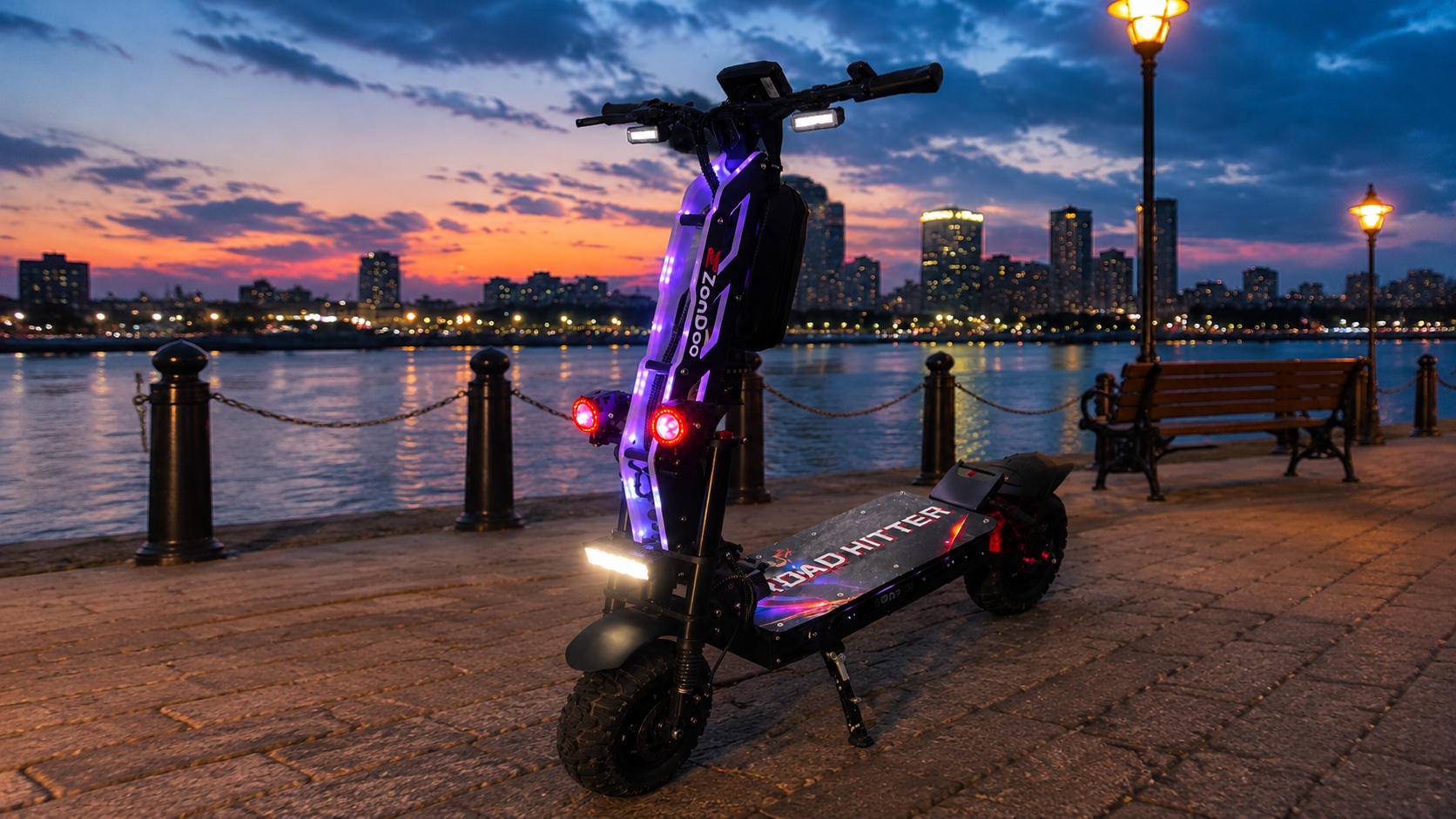
High-performance electric scooters with dual motors and high-torque output deliver unmatched speed, climbing power, and off-road capability for daily commuters and outdoor enthusiasts. However, the high-power drivetrain—including motors and controllers—is also the most vulnerable component of the scooter.
Most motor burnout and controller failure issues are not caused by factory defects. Instead, they stem from incorrect riding habits and neglected daily maintenance. Unlike entry-level low-power scooters, high-power models bear greater operating load, requiring standardized care to extend service life and ensure stable performance.
Below is a professional, practical maintenance checklist to help riders effectively avoid motor and controller burnout.
1. Avoid Sustained Full-Throttle Riding (Core Anti-Burnout Rule)
High-power motors generate huge instantaneous heat under full-load operation. Long-duration full-throttle riding, especially when climbing steep slopes, carrying heavy loads, or riding on rough off-road terrain, will cause continuous heat accumulation inside the motor and controller.
Excessive heat is the primary cause of coil burnout and controller circuit damage. It is recommended to release the throttle appropriately after 3–5 minutes of full-speed riding to allow the drivetrain to dissipate heat naturally. For continuous off-road travel, arrange intermittent rest periods to avoid long-term high-load operation.
2. Regularly Clean Motor Hubs & Heat Dissipation Parts
Most high-power off-road scooters adopt hub motor design. During outdoor and trail riding, mud, sand, dust and gravel can easily adhere to the motor surface and gaps, blocking heat dissipation channels.
Blocked heat dissipation leads to slow heat loss, which greatly increases the risk of internal component aging and burnout. After each off-road ride, clean the motor hub surface and gaps with a dry brush or low-pressure air gun. Do not use high-pressure water to flush directly to avoid water ingress and short circuits.
3. Inspect Wiring & Connector Stability Monthly
Loose, aging or oxidized wiring connectors are one of the hidden causes of controller damage. Unstable circuit connections will cause voltage fluctuations and instantaneous current surges during scooter operation, which can easily break down the controller’s precision circuit board.
Develop a monthly inspection habit: check all wiring terminals of motors and controllers, fix loose plugs, and wipe off oxide layers and dust on connectors. For aged and cracked wires, replace them in time to avoid circuit failure.
4. Standardize Battery Usage to Reduce Drivetrain Load
The battery state directly affects the operating load of motors and controllers. Many riders ignore battery maintenance habits, which indirectly damage the drivetrain system:
-
Avoid completely draining the battery before charging: Low battery voltage will cause insufficient power supply, making the motor work harder and generate extra heat
-
Do not ride while charging: Unstable current output will impact the controller and cause component loss
-
Avoid long-term idle storage: A dormant battery with low power will cause abnormal current output after restarting, increasing drivetrain load
5. Maintain Standard Tire Pressure & Suspension State
Improved tire pressure and faulty suspension are easily overlooked, but they will increase the operating burden of the motor. Insufficient tire pressure or failed shock absorption will increase riding resistance and friction, forcing the motor to consume more power and operate under long-term overload.
Check tire pressure before each ride to keep it within the factory standard range. Regularly inspect the suspension damping effect, replace aging shock-absorbing parts in time, and reduce unnecessary mechanical resistance.
6. Strictly Follow the Load Limit Standard
Every high-power scooter has a clear maximum load capacity. Excessive carrying of people or goods will far exceed the motor’s rated load range. Long-term overload riding will not only reduce speed and climbing performance but also cause irreversible damage to the motor coil and controller.
Do not overload the scooter for a long time, especially during off-road driving, to avoid persistent high-load operation of the drivetrain.
7. Stop Riding Immediately in Case of Abnormal Heat & Noise
Be sensitive to abnormal feedback during riding. If you notice overheated motor hubs, strange jitter noise, power attenuation or intermittent power cut off, stop riding immediately.
Continue riding with faulty conditions will quickly burn out the motor and controller. After stopping, check for heat accumulation, wiring faults or mechanical jamming, and resume use only after troubleshooting.
Final Summary
The durability of high-power electric scooters depends 50% on factory manufacturing quality and 50% on daily standardized maintenance. Most drivetrain failures are avoidable through simple and regular inspections and correct riding habits.
Following the above maintenance checklist can effectively prevent motor and controller burnout, maximize the performance of high-power scooters, and greatly extend the overall service life of the vehicle.
Share:
Electric Scooters: The Ultimate Campus Travel Hack for College Students — Ace Classes, Run Errands, and Explore Weekends in Style
Brake Pads Replacement Signs — Don’t Wait Until It’s Too Late