
Commuting across cities in the United States brings a familiar daily struggle: cracked asphalt, sudden potholes, uneven sidewalk slabs, patched pavement, manhole covers, and loose gravel scattered across bike lanes. Many entry-level lightweight electric scooters look sleek and portable for city travel, yet they struggle badly once they hit rough urban surfaces. A small bump can create jarring vibrations, throw off your balance, damage wheel bearings, or even cause a sudden fall if you strike a deep pothole at speed.
For American daily commuters, raw top speed or maximum advertised battery range is not always the top priority. The ideal urban e-scooter must be built to absorb repeated bumps, remain stable on damaged pavement, and comply with local municipal riding regulations. Whether you navigate Chicago’s notoriously pothole-filled roadways, busy Los Angeles streets and cracked sidewalks, wet coastal pavement in Seattle, or rush-hour downtown corridors on the East Coast, your scooter needs to stand up to real-world city conditions, not just perfectly smooth test tracks.
Key Features to Look For In an Urban Commuter E-Scooter
1. Quality Suspension System
Front suspension or dual front-and-rear suspension is the biggest upgrade for riders regularly encountering potholes and uneven sidewalks. Suspension absorbs sudden impacts, reduces stress on your wrists, shoulders and knees, and keeps the scooter stable when rolling over cracks, curbs and road imperfections. Basic scooters with solid tires and zero suspension transfer every vibration directly into your hands and feet. Over months of daily commuting, constant harsh vibration also wears down the scooter’s frame, wiring and wheel hubs, leading to premature breakdowns.
2. Large, Puncture-Resistant Tires
10-inch or larger pneumatic air tires deliver superior performance on rough city pavement. Larger wheels can roll over small potholes and pavement cracks much more easily than tiny 6–8 inch wheels, which are prone to catching on gaps and jolting riders. Pneumatic tires also improve grip on wet sidewalks after rain. You will also see honeycomb solid tires as an alternative. They eliminate flat tires entirely, which is a huge plus for commuters who cannot afford unexpected roadside repairs. The tradeoff: solid honeycomb tires transmit more road vibration, so they work best when paired with reliable suspension. Avoid thin, small solid tires if your daily route has heavy road damage.
3. Responsive & Reliable Braking
Urban commuting means constant stop-and-go traffic: crosswalks, traffic lights, jaywalking pedestrians, parked car doors opening unexpectedly, and sudden stops to dodge potholes. Dual disc brakes or hydraulic brakes provide consistent, predictable stopping power even on bumpy or wet surfaces. Low-quality drum brakes tend to fade and lose stopping ability after repeated hard braking, which creates serious safety risks in busy city environments.
4. UL 2272 Safety Certification
This certification is non-negotiable for US buyers. The UL 2272 standard tests the entire electrical system, lithium battery pack, wiring and charger combination for thermal runaway, shock and fire hazards. It is widely recognized across America and required by many retailers and property managers. Without this certification, you face increased fire risk and may not be allowed to bring your scooter into apartments, office buildings or public transit.
5. Foldable, Compact Frame
Most US commuters combine e-scooter rides with public transit. A foldable frame lets you carry your scooter onto buses and trains, store it under your office desk, or tuck it inside small apartment closets. Weight matters too. If you need to carry it up stairs or onto subway platforms, pick a model light enough to lift comfortably, while still retaining a sturdy frame that does not flex over bumpy roads.
6. Stable Deck & Weight Capacity
A wider, longer foot deck gives you better balance when rolling over uneven pavement. Pay close attention to maximum rider weight rating. Heavier riders create more impact force when hitting potholes; an underrated scooter will wear out suspension and tires far faster.
Our Pick: Roadhitter for US Urban Commutes
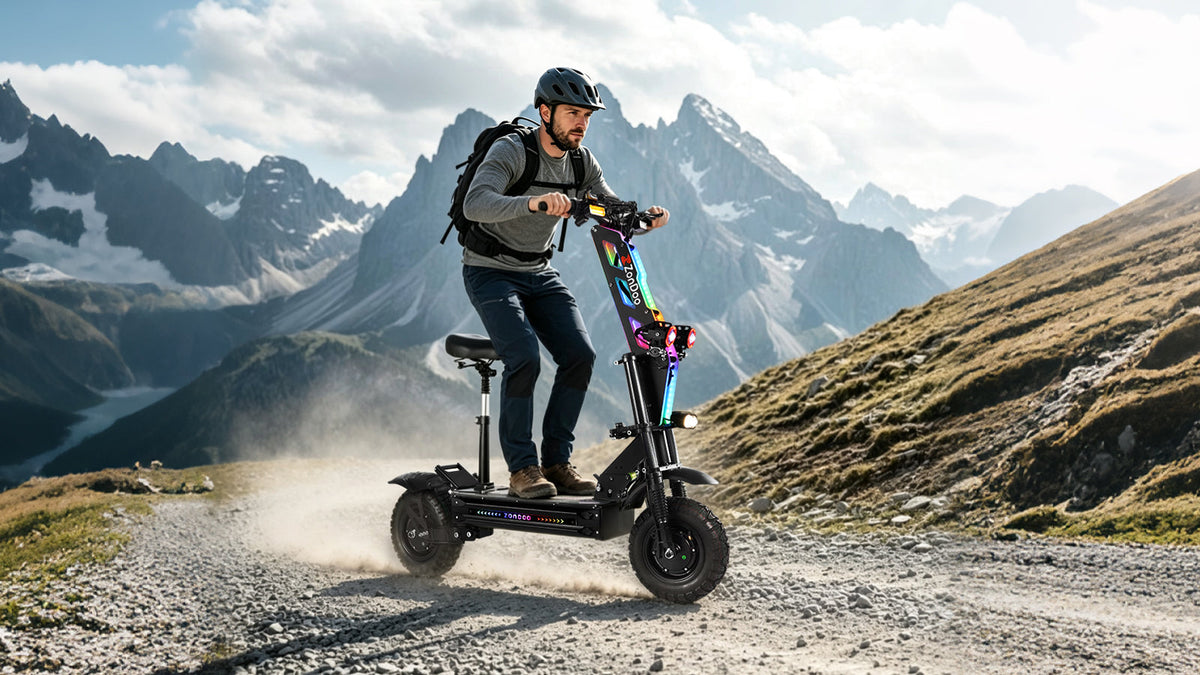
The Roadhitter electric scooter is purpose-engineered for America’s imperfect city roads. Its robust dual suspension and large grippy tires absorb potholes, pavement cracks and uneven sidewalk slabs effortlessly, smoothing out those jarring impacts that plague cheap commuter scooters. The stable wide deck keeps you firmly in control during rush-hour city rides, even when you must swerve around road hazards.
It delivers solid real-world range for daily work trips and hydraulic braking for instant, reliable stopping power in busy pedestrian zones. While it is fully capable of light off-road use on gravel trails, its greatest strength is urban commuting for riders who deal with damaged pavement day after day. The frame remains rigid over repeated bumps without excessive wobble, reducing long-term wear on internal components.
Practical Buying & Riding Tips for US Riders
- Check local laws before you ride The US operates under a patchwork of city-level rules. Many major cities including New York City, Chicago and Los Angeles ban riding e-scooters on sidewalks, with fines for violations. Some cities set strict speed limits and require use of bike lanes whenever available. Rules can shift between neighboring towns, so always verify regulations for your commute route before purchasing.
- Don’t trust lab-tested range numbers alone Manufacturer advertised range is measured on flat, smooth roads, at moderate temperature, with a standard-weight rider. Hills, cold weather, headwinds, potholes and frequent acceleration/deceleration will all reduce your real-world mileage. Calculate your commute with a 20–40% range buffer to avoid running out of battery mid-trip.
- Master pothole safety habits Scan the road 20–30 feet ahead, not just at your front wheel. Slow down before hitting cracks or holes rather than braking mid-impact. Avoid swerving sharply into car traffic to dodge potholes. If you cannot avoid a small pothole, slightly lift your weight off the deck to soften the shock.
- Always wear protective gear Many states enforce helmet laws for adult e-scooter riders. Even where helmets are optional, a helmet is essential protection, especially when riding rough pavement. Knee and elbow pads are also smart additions for urban commuters.
- Schedule regular simple maintenance Pothole impacts loosen brake cables, axles and suspension bolts over time. Check tire pressure and brake responsiveness weekly. Keeping up with simple DIY maintenance prevents small issues from turning into dangerous failures during your commute.
Final Thoughts
City roads across America are rarely perfectly smooth. When selecting the best electric scooter for urban commuting, prioritize shock absorption, stable tires and dependable brakes over flashy marketing specs. The Roadhitter balances rugged durability and comfortable riding, letting you glide over potholes and rough sidewalks with confidence every workday.
Share:
How To Adjust Brake Levers & Calipers On Your Electric Scooter